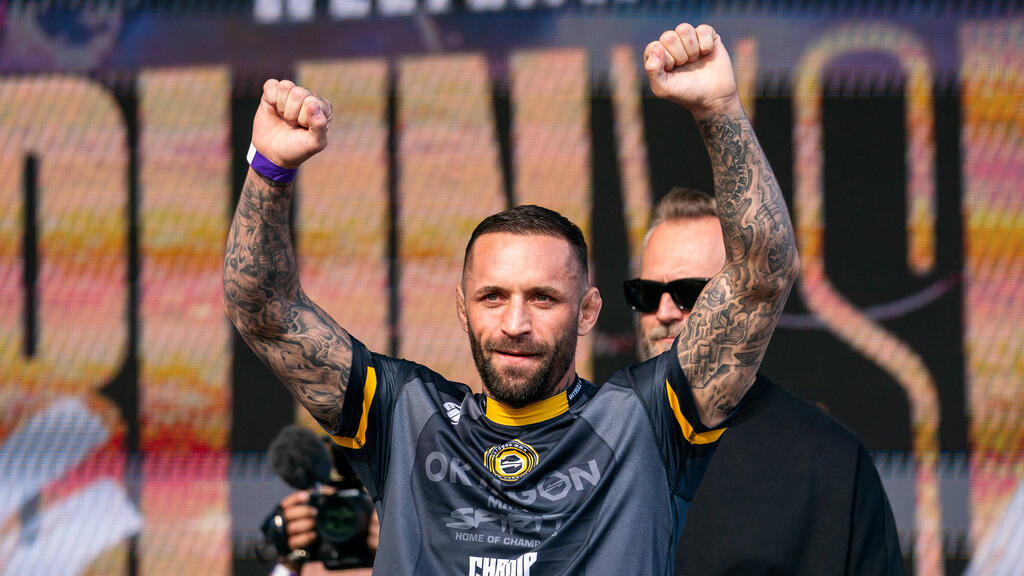
Eckerlin Wiegen-Wirbel: Opponent's Weight Advantage Sparks Outcry
The world of mixed martial arts (MMA) thrives on skill, strategy, and often, sheer grit. But sometimes, the drama unfolds not in the octagon, but on the scale. Such is the case with the recent MMA weigh-in controversy surrounding German superstar Christian Eckerlin, whose opponent's significant weight advantage has ignited a "Wiegen-Wirbel" (weigh-in whirlwind) and sparked widespread outcry.
Christian Eckerlin, affectionately known as "The King of Frankfurt," a former professional footballer turned MMA sensation, has consistently proven his dedication to the sport. A welterweight and middleweight champion in various German organizations, Eckerlin is arguably the biggest star in the German fight scene, captivating audiences with his electrifying performances. His pursuit of an OKTAGON title, which would be the most valuable of his career, underscores his ambition. However, the build-up to his latest bout has been overshadowed by a glaring issue concerning his opponent's Christian Eckerlin's extreme 15kg weight cut and MMA risks, putting the integrity of the contest into question.
The Disparity on the Scale: Unpacking the Eckerlin Gewicht Controversy
For over ten weeks, Christian Eckerlin underwent an arduous preparation regimen, culminating in an incredible 15-kilogram weight cut. His target was the welterweight limit, and he successfully hit 77.4 kilograms at the official weigh-in in Hamburg, with his supportive family – his wife Dominique and their two children – by his side. Dominique expressed both excitement and apprehension, stating, "I have a feeling, and I hope it will be over quickly." Her concern wasn't just for her husband's safety, but for the inherent fairness of the fight.
The "Wiegen-Wirbel" truly began when Eckerlin's opponent, Pukac, stepped onto the scale. Initially, Pukac weighed 1.5 kilograms over the agreed limit. While some fighters miss weight slightly, the situation quickly escalated. Hours later, Pukac's weight had reportedly ballooned to 6 kilograms over Eckerlin's official mark. The most alarming projection suggested that by fight night, Pukac could rehydrate to approximately 88 kilograms, potentially giving him a staggering eleven-kilogram weight advantage over Eckerlin.
This substantial difference in Eckerlin Gewicht compared to his opponent's rehydrated weight isn't merely a statistic; it's a critical factor that can dramatically alter the dynamics of an MMA fight. Dominique Eckerlin highlighted the profound unfairness: "My husband really stuck to the diet for over ten weeks, he was lying next to me in bed with stomach rumbling in the evenings – he had trained down to 84 kilos. The rest is done with water, which is also dangerous. Now he weighs just seven kilos more than I do. And if the opponent doesn't stick to it, that's super unfair and also somehow an advantage for him."
The Perils and Practices of the Weight Cut
Dominique's comments underscore the intense and often dangerous practice known as the "weight cut" in MMA. This process is designed for fighters to shed significant amounts of water weight rapidly to make a lower weight class, then rehydrate and gain it back before the fight, effectively competing at a heavier, stronger natural weight. Here’s how it typically works:
- Water Loading Phase: Over several days, athletes consume excessive amounts of water, sometimes up to ten liters daily, paired with a high-salt diet. This alters the kidney's hormone balance, increasing urine output.
- Dehydration Phase: A day or so before the weigh-in, water intake is drastically reduced (to one or two liters). The body, accustomed to excreting large volumes, continues to shed water, leading to rapid weight loss.
- Assisted Dehydration: MMA professionals employ various methods to accelerate water loss, including intense sauna sessions, thermal blankets, and salt baths. The goal is to achieve the desired fight weight, even if it's only to gain a small advantage.
While effective for making weight, the extreme water loss in such a short period can have severe health consequences, massively impacting the kidneys and other vital organs. Fighters risk dehydration, electrolyte imbalance, and impaired performance. When one fighter undergoes such a rigorous and risky process to meet the agreed weight, only for their opponent to disregard the limits, it fundamentally undermines the spirit of fair competition and raises serious questions about fighter safety.
The Impact of Weight Disparity in the Octagon
An eleven-kilogram weight difference in MMA is colossal, especially at the welterweight division. This isn't just about appearance; it translates directly into tangible advantages for the heavier fighter:
- Increased Power: More mass generally means more force behind strikes. A heavier opponent hits harder, potentially leading to faster knockouts or greater cumulative damage.
- Superior Grappling: In wrestling and jiu-jitsu exchanges, size and strength are paramount. An 11kg advantage makes takedowns easier to execute, holds harder to escape, and ground and pound more effective.
- Enhanced Durability: The heavier fighter typically possesses a more robust frame, capable of absorbing more punishment. Their chin might be able to withstand blows that would fell a smaller opponent.
- Better Cardio (Potentially): While extreme weight cuts can impact stamina, a fighter who makes weight relatively easily and rehydrates effectively often has a significant gas tank compared to an opponent who is severely depleted from an intense cut.
For Christian Eckerlin, who dedicated himself to managing his Eckerlin Gewicht perfectly, facing an opponent who could potentially outweigh him by such a margin means fighting uphill from the very first bell. It demands an even greater level of skill, technique, and mental fortitude to overcome the physical disparity.
Fair Play and the Future of Weigh-In Regulations
The Eckerlin Wiegen-Wirbel highlights a recurring problem in MMA: the challenges of regulating weight cutting and ensuring fair play. While commissions set rules, the execution and adherence vary. The ethical implications are clear: is it fair for one athlete to sacrifice health and adhere strictly to rules, only for another to gain a significant, perhaps unsportsmanlike, advantage?
One potential solution often discussed in the MMA community is implementing "fight night" weigh-ins or hydration tests to curb extreme rehydration. Some promotions have already adopted measures to ensure fighters don't rehydrate beyond a certain percentage of their official weigh-in weight. Such regulations aim to protect fighters' health and maintain competitive balance, preventing scenarios like the one Eckerlin faces.
For fans, understanding the nuances of the weigh-in process and its implications can deepen their appreciation (or sometimes, frustration) with the sport. It's not just about the numbers on the scale, but what those numbers represent for fighter safety, strategy, and the integrity of the contest.
Conclusion: Eckerlin's Resolve Amidst Adversity
Despite the considerable weight disadvantage, Christian Eckerlin is set to step into the octagon against Pukac, performing before the watchful eyes of his family. For Eckerlin, his family represents his ultimate motivation. "The family is the most important thing for me, and having them here with me means everything and is, of course, a huge motivation," he stated. This personal drive, combined with his status as a champion and his meticulous management of his Eckerlin Gewicht, speaks volumes about his character and resilience.
The "Wiegen-Wirbel" surrounding this fight serves as a stark reminder of the complexities and challenges inherent in professional combat sports. While the controversy casts a shadow over the fairness of the bout, it also underscores the unwavering dedication of athletes like Christian Eckerlin, who push their bodies to the limit to compete at the highest level. As Eckerlin prepares to face his opponent, not just across the ring, but across a significant weight divide, the MMA world watches, eager to see how "The King of Frankfurt" will navigate this unfair disadvantage and fight for both victory and the principle of fair play.